DOP 360: What Is an AI SRE?
Show Notes
#360: Assume your production systems go sideways at 3:00am. Your phone doesn’t ring. You wake up to a clean incident report - the system caught the problem, fixed itself, and left a Slack note saying it handled things at 3:15. Would you trust it? Viktor wouldn’t, not at first. Same as a new hire, a new tool, a new anything. Trust gets earned. A few months in, if it hasn’t messed up, then maybe.
So what’s actually new? We had self-healing in decades past, and Kubernetes brings a crashed pod back without anyone awake to watch. Birol Yildiz, co-founder and CEO of ilert, puts the line where it belongs: the old stuff runs on predefined patterns - known problem, known fix, automate it. The new part is diagnosing a root cause nobody wrote a rule for and then knowing what to do about it. And no, ilert isn’t training models on your data. The agent runs on foundational models from the frontier labs, feeds them the same context any SRE would pull - telemetry, recent changes, the health of your infra - runs the investigation loop, and hands you a root cause with the evidence attached.
Then the real argument starts, and it’s about knowledge. Viktor keeps circling the blind spot he sees at every company: the wiki, the runbooks, the tribal stuff nobody keeps current. Birol’s answer is blunter than you’d expect from a guy selling this - dump your Confluence and your hundred stale runbooks into the agent and you cause more damage than results. Code is the documentation that’s actually true. ilert’s agent doesn’t even read runbooks. It builds a live service topology straight from tracing data and rebuilds it when things drift.
What happens when a bad incident month turns your $100 bill into $10,000 - Birol’s answer is a credit budget with a human paged when you blow past it. Who’s accountable when the agent makes it worse? Has to be a human. Agents are tools. You don’t get to blame your AI coding agent for shipping garbage code, and ilert doesn’t get to blame the model either. Trust is binary - five good runs and one bad one, and you strip its write access. But even in observe-only, the value is real, because the time sink in an incident was never the fix, it was finding the needle. Cut root cause from 45 minutes to a few. And the closer nobody wants to hear: if you skipped observability and fifteen years of homework, an AI SRE isn’t going to save you. You can’t skip the parts you skipped.
Frequently Asked Questions
What is an AI SRE and what does it actually do?
How is an AI SRE different from AIOps or self-healing?
Should you feed your runbooks and wiki to an AI SRE?
How autonomous should an incident response agent be?
Who is accountable when an AI SRE makes an incident worse?
Does your company need to be mature before adopting an AI SRE?
What is the DevOps Paradox podcast?
Episode Transcript
Share and Download
Guests
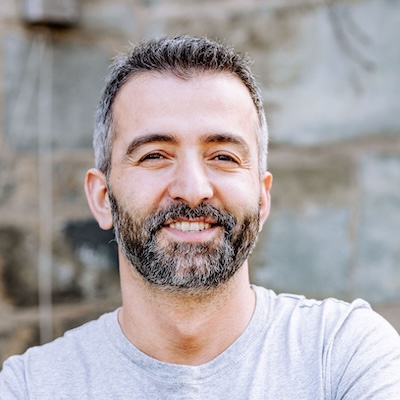
Birol Yildiz
Birol Yildiz is the Co-founder and CEO of ilert, where he leads the company with a unique blend of technical and product expertise. Previously, he served as the Chief Product Owner for Big Data products at REWE Digital. With a solid background in computer science, Birol bridges the gap between developers and product strategists, continually striving to innovate and deliver\ customer-centric solutions at ilert.
Hosts


Viktor Farcic
Viktor Farcic is a member of the Google Developer Experts and Docker Captains groups, and published author.
His big passions are DevOps, Containers, Kubernetes, Microservices, Continuous Integration, Delivery and Deployment (CI/CD) and Test-Driven Development (TDD).
He often speaks at community gatherings and conferences.
He has published DevOps Paradox and Test-Driven Java Development.
His random thoughts and tutorials can be found in his blog The DevOps Toolkit.